

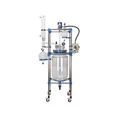

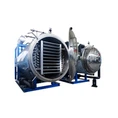
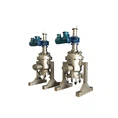
In modern industrial production, energy consumption control has become a key part of a company's core competitiveness. For industries that rely on distillation, a central question is whether vacuum distillation is truly more energy efficient than atmospheric distillation. This question appears simple, but it involves complex physical principles, equipment selection, and process optimization. This article will delve into the energy efficiency advantages of vacuum distillation

Key Takeaways: Vacuum vs. Atmospheric Distillation
Vacuum distillation lowers the boiling point of materials by reducing the system pressure, allowing separation to occur at a lower temperature. This core advantage directly leads to significant energy savings, especially when dealing with heat-sensitive or high-boiling-point substances. In contrast, while atmospheric distillation equipment is simpler, it usually requires higher temperatures to reach the boiling point, which not only consumes more energy but may also lead to material degradation. Therefore, for many modern industrial applications, an efficient vacuum distillation unit is key to achieving high-efficiency production and energy-saving environmental protection.
Understanding the Principles of Distillation
What is Distillation? A Quick Refresher
Distillation is a unit operation that separates components in a mixture based on their volatility differences. When a mixture is heated to its boiling point, the more volatile components vaporize first. These vapors are then condensed into a liquid to achieve separation. In the chemical, pharmaceutical, and food industries, distillation technology is ubiquitous. However, traditional distillation methods (i.e., atmospheric distillation) face many challenges when processing certain special materials.
The Role of Pressure and Boiling Points
Pressure is a key factor affecting a substance's boiling point. According to the Clausius-Clapeyron equation, as the external pressure decreases, the liquid's boiling point also drops. Vacuum distillation leverages this principle, using equipment like a vacuum distillation pump or a vacuum pump for distillation to draw the distillation system into a negative-pressure state. For example, the atmospheric boiling point of water is 100°C, but at 0.01 MPa (about 0.1 atm), its boiling point drops to around 45°C. This change in physical properties provides the possibility for handling heat-sensitive materials and reducing energy consumption.
How Vacuum Distillation Boosts Energy Efficiency
Lowering the Boiling Point: The Core Advantage

Vacuum distillation has the greatest advantage of lowering the boiling point of materials, allowing separations that would normally require high temperatures to be completed at relatively mild temperatures. For example, some high-boiling-point natural products or synthetic compounds may require temperatures exceeding 200°C for atmospheric distillation, which not only consumes huge amounts of energy but may also cause thermal degradation or polymerization of the material. By using vacuum distillation, the same material might only need 100°C or even lower temperatures, significantly reducing the energy required for heating.
Reduced Thermal Stress and Energy Input
Lower operating temperatures not only save heating energy but also reduce thermal stress on the equipment. At high temperatures, the distillation pot and pipes experience greater thermal expansion and corrosion, resulting in a shorter equipment lifespan and higher maintenance costs. Vacuum distillation operates at lower temperatures, which places less demand on the equipment, effectively controlling the energy consumption and maintenance costs of the entire system.

Enhanced Separation at Lower Temperatures

In some cases, vacuum distillation not only saves energy but also improves separation efficiency. For mixtures with very close boiling points, high-temperature operation at atmospheric pressure may cause their vapor-liquid equilibrium curves to flatten, making separation more difficult. However, under vacuum conditions, the difference in boiling points can be magnified, resulting in better separation and reducing the need for more theoretical plates.
Comparing Energy Consumption: Vacuum vs. Atmospheric
Case Study: A Traditional Distillation Process
To separate an organic solvent with a boiling point of 180°C, for example, we would need to set the heating system to at least 200°C at atmospheric pressure to ensure distillation efficiency, which consumes a large amount of electricity or steam. Furthermore, the condensing system also needs to handle high-temperature steam, and its cooling load is correspondingly high. The entire process is not only energy-intensive, but if the material is temperature-sensitive.
Case Study: Optimizing with Vacuum Distillation
If we convert the above process to a vacuum distillation setup with a system pressure of 0.05 MPa, the solvent's boiling point may drop to 120°C. In this case, the heating system only needs to maintain a temperature of around 140°C. This adjustment will result in significant energy savings. Depending on the materials and equipment used, energy consumption can be decreased by 30% to 50%, or even more. This not only reduces operating costs but also has major economic benefits for the organization.
The Hidden Costs of Atmospheric Distillation
The "cheap cost" of atmospheric distillation is frequently a deceptive impression. In addition to the significant energy usage, there are also hidden costs. High temperatures, for example, can degrade materials, resulting in byproducts and reduced product yield and purity. This necessitates additional purification operations to compensate, resulting in increased energy usage and expenditures. Furthermore, periodic equipment repair and replacement contribute to the long-term expense of atmospheric distillation.
Beyond Energy: Other Advantages of Vacuum Distillation
In addition to energy savings, vacuum distillation has many other key advantages that make it the preferred choice for many industrial applications.
Protecting Heat-Sensitive Compounds
Many natural products, such as essential oils, vitamins, and certain drug components, are extremely sensitive to high temperatures. High temperatures can cause them to decompose, deteriorate, or lose their biological activity. Using a vacuum distiller allows distillation to be carried out at temperatures far below their decomposition temperature, perfectly protecting these valuable compounds. For these applications, vacuum distillation is almost the only viable separation technology. If you are interested in this type of technology, you can further learn about The Science of Short Path Distillation: High Purity, Low Temperature. Short path distillation is a special form of vacuum distillation designed for the efficient processing of heat-sensitive materials.
Improving Product Purity and Yield
At lower temperatures, the thermal degradation of materials is inhibited, which means that the generation of by-products and impurities is greatly reduced. This directly leads to higher product purity, while the reduced material loss also improves the overall product yield. For high-value products, the economic return from improved purity and yield may far outweigh the value of the saved energy.
The Safety Factor: Why Lower Temperatures Matter
In industrial production, safety is paramount. Operating flammable and explosive organic solvents at high temperatures poses obvious risks. The vacuum distillation process takes place at low temperatures, which significantly decreases the risk of fire and explosion. Furthermore, because the system is under negative pressure, if a leak occurs, outside air will enter the system rather than dangerous compounds seeping out, increasing operating safety.
Potential Drawbacks and Considerations
The Cost of Vacuum Systems
Although vacuum distillation can save a lot of money in long-term operation, the initial equipment investment is usually higher than for atmospheric distillation. A complete vacuum distillation apparatus or vacuum distillation kit, including the vacuum pump, seals, and control system, has a relatively high cost. When making decisions, companies must conduct a comprehensive return on investment analysis.
Operational Complexity and Maintenance
Vacuum distillation systems have extremely high requirements for equipment sealing. If the seals fail, the system will not be able to maintain the required vacuum level, which will affect the distillation effect. Therefore, operators need to receive more professional training, and equipment maintenance also needs to be more meticulous. Regular vacuum pump maintenance and seal inspections are essential.
When Is Atmospheric Distillation Still the Better Choice?
Not all circumstances are appropriate for vacuum distillation. Because of its low initial investment, ease of use, and simple equipment, atmospheric distillation remains an economically viable option for simple mixtures that are not heat-sensitive, have low boiling points, and do not require high output requirements. For instance, a straightforward separation of a water-ethanol mixture typically does not require sophisticated vacuum distillation equipment.
Choosing the Right Distillation Method for Your Application
A Decision-Making Framework
The following framework can be used when selecting a distillation method:
- Material Properties: Is your material heat-sensitive, or does it have an excessively high boiling point?
- Product Requirements: What are your requirements for product yield and purity?
- Economic Considerations: How much is your initial investment willing to be? Is long-term operating cost your primary concern?
- Safety Factors: Is your material flammable or explosive? Can low-temperature operation significantly reduce risks?
Only by carefully weighing these factors can you choose the distillation method that best suits your needs.
TOPTION's Solution: Tailored Distillation Equipment
TOPTION, as a professional supplier of laboratory and industrial equipment, offers a full range of vacuum distillers and vacuum distillation units. We not only provide standardized vacuum distillation setups, but we can also customize the optimal distillation solution for you based on your specific application needs.
FAQ
Can vacuum distillation save money on a large scale?
Yes, in many large-scale industrial applications, the energy efficiency advantage of vacuum distillation allows it to greatly reduce expenses in the long term. Although the initial investment is costlier, its total cost of ownership is frequently lower than atmospheric distillation by reducing energy usage, enhancing yield, and minimizing maintenance.
What materials benefit most from vacuum distillation?
Vacuum distillation is best suited for heat-sensitive compounds, compounds with high boiling points, and easily degradable biologically active molecules such as essential oils, flavorings, medication intermediates, and some polymer monomers.
Does vacuum distillation affect the final product's quality?
On the contrary, by operating at low temperatures, vacuum distillation can reduce thermal degradation and the generation of by-products, thereby significantly improving the purity and quality of the final product.
How to determine if my process needs a vacuum system?
First, evaluate whether your material is heat-sensitive or has a high boiling point. If you need to perform separation at a temperature lower than the atmospheric boiling point, or have very high requirements for product purity and yield, then using distillation to vacuum technology is a wise choice.
Click here to watch the Molecular distillation video!
Contact now