

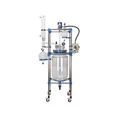

Glass reactor is a common and important equipment in chemical laboratory and industrial production process. With the continuous development of technology, there are single, double, and triple glass reactors. Although they are all based on glass materials and have similar basic functions, there are significant differences in their structure, principle of operation, and scope of application. Below we will discuss these differences in depth and present typical examples of their use in various industries.
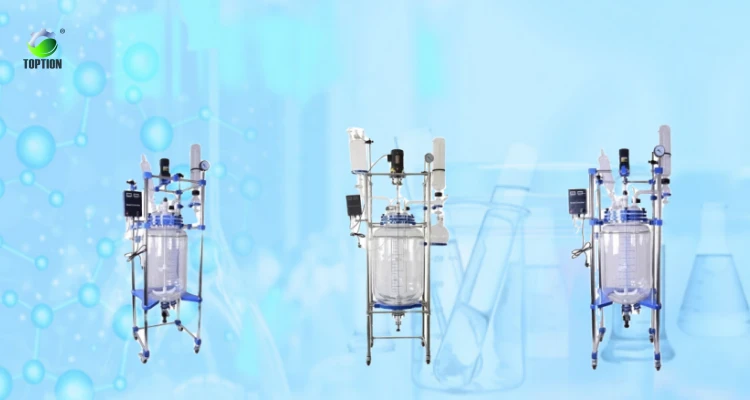
Single-layer glass reactor
A single-layer glass reactor consists of a vessel used to carry out chemical tests or substance-mixing processes. The vessel is usually made of a glass material with good corrosion resistance, such as borosilicate glass.

Characteristics
- Simple structure, easy operation and maintenance.
- Suitable for some basic chemical reactions and tests.
- Relatively low cost, suitable for small-scale laboratory use.
Application Areas
- Laboratory teaching and scientific research: small-scale experiments in chemical, biological, and other laboratories.
- Pharmaceutical industry: for the preparation of pharmaceutical raw materials or intermediates.
- Food processing: e.g. synthesis of spices and food additives.
Double-Layer Glass Reactor
The double-layer glass reactor is constructed by adding another layer of container on top of the single-layer container jacket. A sandwich is formed between the two vessels, which can be filled with heat transfer oil or water for heating, providing better temperature control.

Characteristics
- Good isolation properties to keep the internal temperature stable.
- Higher corrosion resistance, suitable for a wider range of chemical reactions.
- Higher corrosion resistance, suitable for a wider range of chemical reactions.
Application Areas
- Chemical industry: preparation of organic synthetic products, polymer materials, etc.
- Chemical industry: preparation of organic synthesis products, polymer materials, etc. Oil and gas industry: catalyst research, hydrogenation reactions, etc.
- Laboratory and mass production: to meet the requirements of different sizes and capacities of experimental or production processes.
Triple glass reactor
The triple glass reactor is composed of a layer of containers added on the basis of the double-glass reactor. A vacuum sandwich is formed between each vessel to provide better isolation and reduce the influence of the external environment on the internal.

Characteristics
- Excellent isolation properties to minimize the effect on the external environment.
- Excellent corrosion resistance for demanding chemical reactions.
- Larger capacity ranges are available.
Areas of application
- Chemical industry: fine organic synthesis, high-temperature and high-pressure reactions, etc.
- Pharmaceutical and biotechnology: preparation of high-purity drugs or biological products.
- Laboratory and mass production: to meet the needs of complex experiments and mass production.
There are significant differences between single, double, and triple glass reactors in terms of structure, working principle, and scope of application. A single-glass reactor is suitable for small-scale laboratory tests, a double-glass reactor is more suitable for medium-scale chemical processes and industrial production, and a triple-glass reactor is more suitable for complex chemical processes. In the future, with the progress of science and technology, we can look forward to the appearance of more new types of glass reactors to meet the ever-changing needs.
TOPTION's glass reactors are known for their high quality, reliability, and innovative design. Not only do they focus on product quality, but they are also committed to providing a personalized and tailor-made service to meet the specific needs of their customers. Whether it's a single, double, or triple glass reactor, TOPTION offers customers a wide selection of models and capacities.
By choosing a glass reactor from TOPTION, you can enjoy the following advantages:
-High-quality materials: TOPTION uses high-quality materials such as good corrosion resistance, high-temperature resistance, and high compressive strength to manufacture their reactors.
-Advanced technology: They actively follow the latest developments and apply advanced technology to their product designs to ensure excellent performance.
-Safety and reliability: TOPTION's glass reactors undergo rigorous testing and quality control to ensure safety and reliability during use.
-Customised service: TOPTION offers a personalized service, designing and producing glass reactors that meet specific requirements according to customer needs.

Choose TOPTION to get better experimental results, improve work efficiency, and contribute to scientific research and production innovations. info@toptionlab.com