


When it comes to laboratory equipment, rotavapors are indispensable tools for many scientific and industrial applications. They are widely used in processes such as distillation, concentration, and solvent recovery. One of the emerging features in modern rotavapors is the self - cleaning function. As a rotavapor price supplier, I often get asked the question: "Do rotavapors with a self - cleaning function cost more?" In this blog, we will explore this question in detail.
The Basics of Rotavapors
Before delving into the cost aspect, let's briefly understand what a rotavapor is. A rotary evaporator, or rotavapor, is a device used to remove solvents from samples by evaporation under reduced pressure. It consists of a rotating flask that holds the sample, a heating bath to provide heat, a condenser to cool and condense the vapor, and a vacuum system to reduce the pressure. The rotation of the flask increases the surface area of the sample, facilitating faster evaporation.
There are different types of rotavapors available in the market. For example, the Multiple Effect Rotary Evaporator is designed to achieve higher efficiency by using multiple evaporation stages. This type of rotavapor can be more suitable for large - scale industrial applications where high - volume solvent removal is required. Another option is the RE - 52AA 1L Rotary Vacuum Evaporation System, Rotary Evaporator Organic Chemistry, which is a smaller, more compact model often used in laboratory settings for smaller - scale experiments.
The Self - Cleaning Function
The self - cleaning function in rotavapors is a relatively new and advanced feature. It allows the rotavapor to clean itself automatically, reducing the need for manual cleaning. Manual cleaning of rotavapors can be a time - consuming and labor - intensive process. It often involves disassembling parts of the device, cleaning them with solvents, and then reassembling the components. This not only takes up valuable time but also requires careful handling to avoid damage to the equipment.
A rotavapor with a self - cleaning function typically uses a combination of automated processes. For example, it may use a cleaning solution that is circulated through the system to dissolve and remove any residues. Some self - cleaning rotavapors can also perform a drying cycle after the cleaning process to ensure that the device is ready for the next use.
Factors Affecting the Cost of Rotavapors
There are several factors that contribute to the cost of rotavapors, and the self - cleaning function is just one of them.
1. Technology and Complexity
Rotavapors with a self - cleaning function are generally more technologically advanced. They require additional sensors, pumps, and control systems to operate the self - cleaning process. The development and integration of these components add to the overall cost of the device. For example, the sensors need to accurately detect the presence of residues and determine the appropriate cleaning time and intensity. The pumps need to be able to circulate the cleaning solution effectively throughout the system. All these technological requirements increase the complexity of the rotavapor, and thus, the cost.
2. Material Quality
To ensure the effectiveness of the self - cleaning function, the materials used in the rotavapor need to be of high quality. The components that come into contact with the cleaning solution need to be resistant to corrosion and chemical damage. For instance, the condenser and the evaporation flask may need to be made of special glass or coated with a protective layer. High - quality materials are more expensive, which in turn drives up the cost of the rotavapor.
3. Research and Development
The development of the self - cleaning function involves significant research and development efforts. Manufacturers need to invest time and resources in testing different cleaning methods and technologies to ensure that the self - cleaning function is reliable and efficient. These R & D costs are ultimately reflected in the price of the rotavapor.
Comparing Costs
In general, rotavapors with a self - cleaning function do cost more than those without. However, the price difference can vary depending on the brand, model, and specific features of the rotavapor.
Let's take a look at some examples. A basic rotavapor without a self - cleaning function may cost in the range of a few thousand dollars. On the other hand, a rotavapor with a self - cleaning function can cost anywhere from 20% to 50% more, depending on the complexity of the self - cleaning system.
It's important to note that while the initial cost of a self - cleaning rotavapor is higher, it may offer long - term cost savings. As mentioned earlier, manual cleaning is time - consuming and may require the use of expensive cleaning solvents. By using a self - cleaning rotavapor, you can reduce the labor cost associated with cleaning and potentially save on the cost of cleaning solvents. Additionally, a self - cleaning rotavapor may have a longer lifespan as it is less likely to be damaged during the cleaning process.
Customization and Cost
Another aspect to consider is customization. If you have specific requirements for your rotavapor, you may choose to Rotary Vacuum Evaporator Customize. Customization can add to the cost, regardless of whether the rotavapor has a self - cleaning function or not. However, if you need a self - cleaning rotavapor with specific features tailored to your application, the cost will be even higher.
Making a Decision
When deciding whether to purchase a rotavapor with a self - cleaning function, you need to consider your specific needs and budget. If you have a high - volume laboratory or industrial operation where time is of the essence, the self - cleaning function may be worth the extra cost. On the other hand, if you have a small - scale laboratory with limited resources, a basic rotavapor without a self - cleaning function may be a more suitable option.
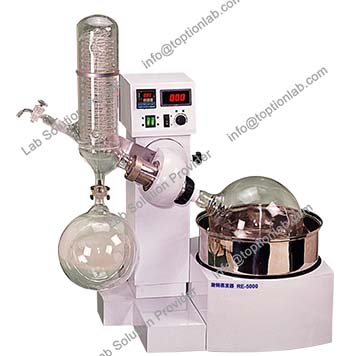

As a rotavapor price supplier, I am here to help you make an informed decision. We offer a wide range of rotavapors, both with and without self - cleaning functions. Our team of experts can provide you with detailed information about the features and costs of different models. If you are interested in purchasing a rotavapor or have any questions, please feel free to contact us for a consultation. We are committed to providing you with the best solutions for your laboratory or industrial needs.
References
- Smith, J. (2018). Laboratory Equipment Handbook. Elsevier.
- Brown, A. (2020). Advances in Rotary Evaporator Technology. Journal of Scientific Equipment, 15(3), 45 - 56.