

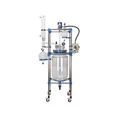

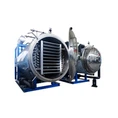
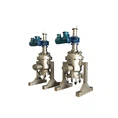
Freeze dryer machine
Vacuum freeze dryers play a vital role in the pharmaceutical industry for the preservation of sensitive medicines, vaccines, and biological products. By removing moisture, the shelf life of these temperature-sensitive items is greatly extended. Pharmaceutical companies experienced unprecedented demand for sterile injectables and vaccines during the pandemic, prompting new equipment, research & development, and groundbreaking innovations to streamline production.
Lyophilization, the freeze-drying process used to stabilize liquid samples chemically and physically, allows them to be transported and stored across long distances without needing refrigeration, making it an invaluable tool for scientists.

Enhancing Drug Stability and Longevity
Freeze drying (also known as lyophilization) is an increasingly popular preservation method across the pharmaceutical industry. This technique involves subjecting products or specimens to freezing temperatures, lower pressure, and vacuum to extract moisture through sublimation and desorption rather than conventional heat-based methods; the result being a dry powdered product that's easy to transport, store, and handle as well as being easily reconstitute with water - ideal for biopharmaceuticals which may be delicate, unstable or heat sensitive.

Many biopharmaceuticals are susceptible to degradation from chemical, physical, and environmental stresses. Freeze drying has proven successful at increasing drug stability while simultaneously increasing shelf life and decreasing costs. Scientists are currently exploring this technique in order to preserve vaccines more quickly for delivery; similarly, it has also been employed in manufacturing and storing antibiotics without altering their physical structures or effectiveness.
Preserving Vaccines and Biologics
Freeze drying plays an essential role in the manufacturing of vaccines and biologics. While liquid formulations may become degraded over time due to environmental influences, freeze-dried products remain active and alive in their entirety.
An essential characteristic of any successful freeze-dried product is its ability to maintain both native protein structure and functionality. Unfortunately, these features may become compromised during storage due to chemical instabilities or physical factors (denaturation, aggregation, precipitation).

To address these instabilities, scientists employ intensification through quality-by-design tools. These tools help scientists collate input variables that affect product stability to maximize quality while simultaneously optimizing key process parameters such as freezing rate, annealing temperature, and secondary drying temperature.
Technological Advancements
Technological innovations are revolutionizing every sector, including the pharmaceutical industry. Digital tools are helping companies lower costs, streamline production, and improve product quality.
Freeze drying (commonly known as lyophilization) is a process of extracting moisture from products through sublimation, enabling ice crystals to change from a solid directly into a gas without passing through liquid first. This technique preserves pharmaceuticals, vaccines, and biologicals by protecting against thermal damage.
These advancements also extend the shelf life and stability of materials that are usually heat-sensitive, such as proteins exposed to mechanical stress during processing. While this exposes proteins to mechanical strain, this can be reduced by using suitable excipients that protect these molecules from dehydration and aggregate formation. These developments support personalized medicine while guaranteeing safety and efficacy during small-molecule drug manufacturing.


Challenges
Freeze drying has long been used as part of pharmaceutical product preservation methods, especially when it comes to biologics and drugs requiring special conditions for storage. While freeze-dried products may be more costly than those preserved using heat methods, they often boast superior quality while taking up much less space when stored or transported.
Heat-based methods involve heating samples until their water molecules sublimate into vapor; unlike this technique, freeze-drying preserves biological samples while simultaneously extracting any moisture bound within them. It has great applications in biological research as it preserves their chemical and physical properties while simultaneously extracting all available moisture from them.
Continuous freeze drying can be up to five times faster than batch freeze drying, which helps reduce costs and improve throughput. Furthermore, this method offers enhanced flexibility, enabling manufacturers to easily adapt their freeze-drying processes quickly and quickly.
Wide Product Range
Our product line covers a wide range of categories, whether you are into evaporation, extraction, or drying technology, we have you covered. We are committed to providing our customers with a wide variety of choices.
Wide Applications
With a wide range of applications in various fields, our products all play an important role. Whether it's improving efficiency or driving innovation, our products make a difference.
Quality excellence
The quality of our products is exceptional, and each product undergoes stringent quality control to ensure that it meets the highest standards in order to fulfill our customers' expectations.
After Sales Expertise
We are committed to providing perfect after-sales support for our customers, whether it is to solve problems, provide maintenance services, or meet other needs, we always stand in the position of our customers to ensure that they get a satisfactory solution.
Future Outlook
Freeze drying promises a bright future in the pharmaceutical sector, offering significant advantages that include protecting heat-labile drugs, vaccines, and biopharmaceuticals without losing potency or efficacy. Furthermore, this method reduces shipping and storage costs because products can be quickly reconstituted prior to administration.
Protein drugs can be subjected to numerous environmental stresses that compromise their quality and stability, including chemical degradation (disulfide exchange and oxidation reactions) as well as physical instabilities such as denaturation, aggregation, and surface-induced adsorption.
Lyophilization is a highly efficient process for stabilizing protein products with minimal interference to their physiological activity, making it a promising approach for developing advanced therapeutics and nano-derived drug delivery systems.

