

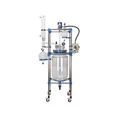

Choosing the right reactor for your chemical process can feel overwhelming. You're faced with numerous options, each with its own set of pros and cons. While various materials exist, this post focuses on clarifying the advantages and applications of glass reactors, specifically those made from borosilicate glass. If you're still on the fence, this deep dive will help you determine if a glass reactor is the right fit for your needs.

1. Why Choose A Glass Reactor? Unveiling The Key Advantages
Glass reactors, often overlooked in favor of larger, seemingly more robust alternatives, offer a unique combination of benefits that make them indispensable in many applications:
• Exceptional Chemical Resistance: This is the cornerstone of a glass reactor's appeal. Borosilicate glass is remarkably inert, resisting attack from a vast range of chemicals, including:
• Acids: Most mineral acids (hydrochloric, sulfuric, nitric, etc.) and organic acids.
• Solvents: Organic solvents like alcohols, ethers, ketones, and hydrocarbons.
• Halogens: Chlorine, bromine, and iodine (though fluorine and hydrofluoric acid are exceptions).
• Salt Solutions: Many aqueous salt solutions.
This broad compatibility minimizes the risk of unwanted reactions, contamination, and corrosion, ensuring product purity and reactor longevity.
• Unparalleled Visibility: The transparency of glass is a game-changer. You can see what's happening inside the reactor in real-time. This allows for:
• Monitoring Reaction Progress: Observe color changes, phase separations, precipitate formation, and other visual cues.
• Early Problem Detection: Identify issues like unexpected reactions, foaming, or solid buildup quickly.
• Process Optimization: Fine-tune reaction parameters based on direct visual feedback.
• Easy Scale-Up: Visual observations during small-scale experiments greatly simplify scaling up the process, as you have a clearer understanding of the reaction dynamics.
• Smooth, Non-Porous Surface: The smooth surface of borosilicate glass has several advantages:
• Easy Cleaning: Residues and contaminants are less likely to adhere, making cleaning straightforward.
• Reduced Cross-Contamination: The non-porous nature minimizes the risk of previous reactions contaminating subsequent ones.
• High Purity: The inert surface contributes to maintaining the purity of the reaction mixture.
• Thermal Shock Resistance: Borosilicate glass is specifically designed to withstand rapid temperature changes. This is crucial for reactions involving exothermic (heat-generating) or endothermic (heat-absorbing) processes, where quick heating or cooling may be required.
• Relatively Low Cost (for smaller sizes): For smaller-scale applications (lab-scale and pilot-scale), glass reactors are often more cost-effective than stainless steel or other specialized alloy reactors.

2. Addressing Common Concerns & Limitations
While glass reactors offer numerous advantages, it's important to acknowledge their limitations:
• Pressure Limitations: Glass reactors are generally not suitable for high-pressure reactions. Their pressure ratings are typically limited to a few bar (atmospheres), depending on the size and design.
• Temperature Limitations: While borosilicate glass has good thermal shock resistance, it's not suitable for extremely high-temperature reactions. The upper limit is usually around 200-250°C, although some specialized glass types can go higher.
• Fragility: Glass is inherently more fragile than metals. Careful handling is essential to avoid breakage.
• Vulnerability to Strong Alkalis & Certain Acids: Strong bases (high pH), hydrofluoric acid, and hot, concentrated phosphoric acid can attack and weaken glass.
• Scaling Up Challenges: While glass reactors are excellent for smaller scales, scaling up to very large industrial volumes can be challenging due to fragility and pressure limitations.

3. Ideal Applications For Glass Reactors
Glass reactors are particularly well-suited for a variety of applications, including:
• Research and Development (R&D): Their versatility, visibility, and ease of use make them ideal for laboratory research, allowing scientists to explore new reactions and optimize processes.
• Fine Chemical Synthesis: The production of high-value, low-volume chemicals, where purity and precise control are critical.
• Pharmaceutical Manufacturing (especially early stages): Developing and scaling up pharmaceutical processes often rely on glass reactors for their inertness and visibility.
• Distillation and Extraction: The transparency of glass is beneficial for monitoring these processes.
• Crystallization: Observing crystal formation is crucial for optimizing crystallization processes.
• Education and Training: Glass reactors provide a clear and safe way to teach chemical principles and techniques.
• Photochemical reactor: Taking advantage of glass transparency.
• Any process requiring high purity and visual monitoring.
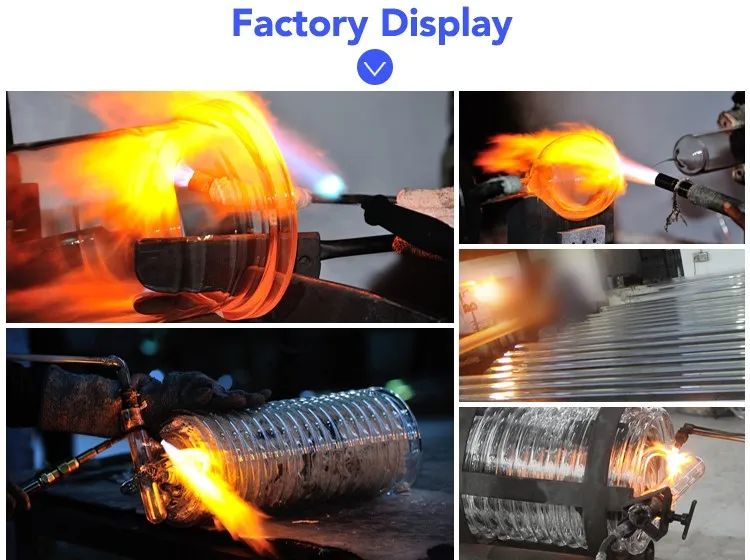
4. Types Of Glass Reactors
Glass reactors come in various configurations, including:
• Jacketed Reactors: These have a double-walled design, allowing for precise temperature control by circulating a heating or cooling fluid through the jacket.
• Single-Walled Reactors: Simpler and less expensive, suitable for reactions where precise temperature control is less critical.
• Round-Bottom Flasks: The most basic type, often used for small-scale reactions.
• Multi-Neck Flasks: Allow for the addition of multiple components, sensors, or stirring mechanisms.
• Custom-Designed Reactors: For specialized applications, glass reactors can be custom-built to meet specific requirements.
• Continuous Stirred Tank Reactors (CSTR): CSTRs of glass materials.
5. Key Considerations When Choosing A Glass Reactor
• Volume: Select a reactor size appropriate for the scale of your reaction.
• Chemical Compatibility: Ensure the glass is compatible with all the chemicals involved.
• Temperature and Pressure Requirements: Verify that the reactor can withstand the expected operating conditions.
• Stirring Mechanism: Choose an appropriate stirring method (magnetic stirrer, overhead stirrer) for your reaction.
• Accessories: Consider any necessary accessories, such as condensers, additional funnels, or sensors.
• Manufacturer: Select a reputable manufacturer known for quality and safety.

Conclusion
Glass reactors, particularly those made from borosilicate glass, offer a compelling combination of chemical resistance, visibility, and ease of use. While they have limitations regarding pressure, temperature, and fragility, they are an excellent choice for a wide range of applications, especially in research, development, and small-scale production. By understanding their strengths and limitations, you can make an informed decision and leverage the unique benefits of glass reactors for your chemical processes. If your application involves corrosive chemicals, requires visual monitoring, and operates within the temperature and pressure limits of glass, a glass reactor is likely an excellent choice.