


Introduction To High-Grade Silicone Oil Challenges

Regulatory Requirements for Industrial Lubricants
Industrial lubricants must adhere to strict quality frameworks to control contamination. Standards like ISO 9001:2015 and industry-specific specifications mandate thorough validation of all materials used in critical applications. For precision tasks, silicone oils must consistently exhibit high levels of purity and meet specific criteria such as viscosity stability, oxidation resistance, and freedom from contamination during processing. Manufacturers are obligated by these regulations to ensure the elimination of any substances that could potentially hinder performance, including processing aids, catalysts, and low-molecular-weight oligomers. Additionally, international quality standards add to these requirements by requiring full traceability and chemical characterization data for all components of the lubricant.
Common Impurities and Color Issues in Silicone Oils
Raw silicone oils carry numerous types of contaminants that can compromise their effectiveness when used in industrial settings. Excessive levels of residual platinum catalysts, resulting from the polymerization process, can pose a potential risk to performance if they exceed 10 ppm. Additionally, the presence of low-molecular-weight cyclic siloxanes (D4, D5, D6) can cause volatility concerns and must be reduced to less than 0.1% total content. Furthermore, oxidation of trace organic compounds can lead to color development and result in a yellow or amber discoloration, which could indicate the formation of degradation products. There is also a risk of volatile organic compounds (VOCs) from synthesis solvents causing fogging or surface contamination on equipment. While traditional purification methods utilizing activated carbon or clay filtration may be used, they are not always sufficient in achieving the desired <5 APHA color values and <100 ppm total volatile content required for high-performance applications.
Understanding Short Path Molecular Distillation Technology
Operating Principles Under High Vacuum Conditions
Short path molecular distillation operates on different principles compared to conventional distillation. Under extreme vacuum conditions, molecules can travel directly from the evaporation surface to the condensation surface without collisions. This separation process, known as "molecular flow," is based on differences in molecular weight rather than boiling point. The distance between the evaporator and condenser is usually 20-50mm, resulting in shorter residence times of seconds instead of hours. When dealing with silicone oils with molecular weights ranging from 5,000-50,000 Daltons, this technique effectively removes lighter components (such as oligomers and solvents) while preserving the integrity of the primary polymer structure.
Temperature Control for Heat-Sensitive Materials
Effective temperature control is crucial for the success of molecular distillation in producing high-quality medical silicone oils. The unique design of the wiped film method ensures a consistent 0.1-0.5mm liquid layer on the heated evaporator, promoting even heat transfer without any areas of excessive heat. This keeps operating temperatures well below atmospheric boiling points, typically around 150-250°C for silicone oils compared to over 400°C under ambient pressure. With advanced PID controllers, temperature stability within ±0.5°C is maintained across the entire evaporation surface.
Meanwhile, the internal condenser operates at a cooler temperature (50-100°C lower) than the evaporator, creating a necessary thermal gradient for effective removal of volatile components. This combination of temperature difference and short residence time (5-30 seconds) prevents any polymer chain breakage or cross-linking that could alter the viscosity of the lubricant.
Advantages Over Traditional Distillation Methods
Molecular distillation outperforms traditional purification techniques in various aspects. By operating at lower temperatures and removing the need for a reboiler, energy consumption decreases by 40-60% compared to packed column distillation. In addition, product yield is significantly increased to 95-98%, minimizing thermal degradation losses, while traditional methods only yield 80-85%.
Additionally, the continuous and single-pass operation eliminates the variability that comes with batch-to-batch processing in steam distillation and vacuum rectification. Unlike chemical purification using bleaching clays or adsorbents, molecular distillation does not introduce any foreign substances that would require subsequent removal. This allows for faster processing time, reducing it from 8-12 hours per batch in conventional systems to a continuous throughput of 10-200kg/hr. As a result, just-in-time production for medical device assembly lines becomes possible.
Silicone Oil Purification Process Implementation
Multi-Stage Molecular Distillation Workflow
| Stage | Temperature | Vacuum & Pressure | Primary Removal Target |
|---|---|---|---|
| Initial Stage | 180-200°C | 1-5 Pa | Volatile organics and low-molecular-weight cyclic siloxanes |
| Second Stage | 220-240°C | 0.1-1 Pa | Medium-weight oligomers and any residual catalysts |
| Polishing Stage | 250-260°C | 0.05-0.1 Pa | Ensures final product meets all specifications |
Process Notes:
- A gear pump feeds material at a rate of 5-50 kg/hr.
- Rotating wiper blades, operating at 150-450 rpm, generate a thin film for efficient devolatilization.
- Precision vacuum pumps maintain differential pressure between stages to prevent cross-contamination.
- Each stage features independent controls for temperature, pressure, and feed rate for real-time adjustment based on incoming material characteristics.
Critical Process Parameters for Industrial Applications

Optimizing parameters directly affects the quality and specifications of our products. The feed rate must be carefully balanced to achieve both efficient throughput and proper residence time. Higher speeds can result in incomplete separation, while slower rates may lead to thermal degradation. For example, for 10,000 cSt silicone oil, the recommended feed rates range from 10-30 kg/hr per square meter of evaporator surface. To ensure even distribution of the film without causing mechanical shearing, the wiper blades should rotate at a speed of 150-450 rpm. When it comes to selecting the vacuum level, it is crucial to consider the type of contaminants we are targeting: a vacuum pressure of 1-10 Pa will remove volatiles, while 0.1-1 Pa is needed to eliminate oligomers for achieving ultra-high purity, and 0.01-0.1 Pa is necessary for volatile capture efficiency without causing product reflux. Additionally, temperature ramping rates of 2-5°C/minute must be followed to prevent thermal shock while reaching operational setpoints. And finally, maintaining a condenser temperature differential (ΔT) between 80-120°C will help maximize volatile capture efficiency without any negative impact on product reflux levels
Achieving Industrial-Grade Purity Standards
Industrial specifications demand rigorous analytical verification at each processing stage. Gas chromatography-mass spectrometry (GC-MS) confirms volatile content below 100 ppm total, with individual cyclic siloxanes under 10 ppm each. Gel permeation chromatography (GPC) validates molecular weight distribution, ensuring removal of fractions below 1,000 Daltons. Inductively coupled plasma (ICP) analysis verifies heavy metal content below 5 ppm total, with platinum catalyst residues under 1 ppm. The Toption MDS series incorporates in-line sampling ports for real-time quality monitoring, enabling immediate process adjustments. Our systems achieve reproducible results meeting international quality standards and industry monograph requirements through precise control of the thermal-vacuum environment.
Decolorization Techniques and Mechanisms

Color Body Removal Through Vacuum Distillation
Color development in silicone oils is a result of conjugated organic compounds that are formed either during the manufacturing process or while the oils are in storage. These compounds, which account for less than 0.01% of the total mass, have a significant impact on the way the oil looks and can also indicate a potential degradation. Through molecular distillation, these color-provoking substances can be selectively removed without causing any harm to the polymer. By creating a vacuum of less than 0.1 Pa and heating it to temperatures between 180-220°C, aromatic compounds with light-absorbing properties (wavelengths of 400-500nm) are evaporated, something that would not be possible under atmospheric pressure due to their high boiling point of over 350°C. The short amount of time spent in this process prevents new color bodies from forming through reactions such as oxidation or polymerization. This physical separation technique successfully reduces color levels from 50-100 APHA to less than 5 APHA without using any chemical bleaching agents that could potentially introduce extractables into the oils.
Maintaining Silicone Oil Properties During Processing
Ensuring functional characteristics during purification necessitates careful process control. Maintaining viscosity stability relies on avoiding chain scission, which is achieved through the Toption system's optimized temperature-time profiles. The polymer structure integrity is confirmed by a constant refractive index of 1.403±0.002. Essential properties for lubrication performance, such as surface tension (20-21 mN/m) and contact angle, remain unchanged.
Additionally, the gear pump feeding mechanism can handle high-viscosity materials (1,000-60,000 cSt) without causing any mechanical degradation. To prevent oxidation during processing and maintain long-term stability without the use of antioxidant additives, nitrogen blanketing is employed.

Equipment Specifications and Scale-Up Considerations
Laboratory to Industrial Scale Systems (2L-200kg/hr)
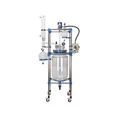
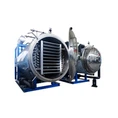
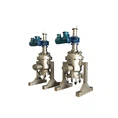
Toption offers a range of molecular distillation options to meet various needs, from laboratory development to full production. The laboratory units are ideal for formulation development and pilot studies, with glass construction allowing for process visualization. For larger volumes, the pilot systems (MDS-10CE) can handle 10-20 kg/hr and bridge laboratory results to production parameters. Our industrial configurations (MDS-50CE through MDS-200CE) have a continuous throughput of 50-200 kg/hr and meet cGMP requirements with their 316L stainless steel construction. Despite the different scales, all systems maintain geometric similarity in film thickness (0.1-0.5mm) and residence time (5-30 seconds), ensuring predictable scale-up.
UL and CE Certification Requirements
As manufacturers in the industrial sector, having equipment that meets quality compliance standards is crucial. Our Toption systems have been certified with CE marking per Machinery Directive 2006/42/EC and Low Voltage Directive 2014/35/EU. Additionally, they meet UL certification requirements for electrical safety (UL 61010-1) and process control (UL 508A). We also ensure ATEX compliance for installation in classified areas commonly found in chemical facilities. Our materials of construction adhere to international standards for silicone contact surfaces. When it comes to validation, we provide IQ/OQ protocols, calibration certificates, and material traceability records. Our convenient certification documentation packages support customer qualification processes and regulatory submissions.

Industrial Applications and Case Studies
Precision Instrument Lubricant Applications
High-precision instruments depend on ultra-pure silicone oils for consistent performance and to prevent component breakdown. To achieve the desired <3 APHA color specification for gyroscope lubricants, a major aerospace manufacturer turned to Toption MDS-50CE systems. By processing 1,000 cSt dimethyl silicone oil at 220°C under 0.5 Pa vacuum, the system was able to reduce particulate matter from 50 particles/mL (≥10μm) to <5 particles/mL, surpassing industry requirements. To avoid lens fogging, optical equipment applications call for lower viscosity oils (100-350 cSt) with minimal volatile content. The use of multi-stage distillation achieved a total volatile level of <50ppm, doubling the operational life from 18 to 36 months.
High-Performance Machinery Lubricant Requirements
In high-temperature industrial environments, strict purification requirements must be met. The lubricants used in vacuum pumps must have a long lifespan and contain no detectable volatile compounds. To accomplish this, a manufacturer of semiconductor equipment employed a three-stage molecular distillation process. This resulted in individual contaminant levels below 1 ppm in 10,000 cSt silicone oil. The processing conditions were as follows: Stage 1 (190°C, 2 Pa), Stage 2 (230°C, 0.5 Pa), and Stage 3 (250°C, 0.1 Pa) with a throughput of 15 kg/hr. Post-distillation analysis confirmed the absence of platinum catalyst and total cyclic levels below 5 ppm, while still maintaining lubricity after 1 million operation cycles.
Conclusion and Best Practices
Key Success Factors for Implementation
Effective purification of medical-grade silicone oil relies on a systematic approach and strict quality assurance measures. Before production, a thorough analysis of the materials must be conducted to detect any contaminants and establish baseline properties. To determine the best operational conditions, trials should be carried out at a smaller scale, testing various parameters such as temperature (ranging from 150-280°C), pressure (from 0.01-10 Pa), and feed rate (between 5-50 kg/hr). By implementing process analytical technology (PAT), quality can be monitored and adjusted in real time. To maintain consistent performance, regular maintenance for vacuum pumps, wiper mechanisms, and heating elements is essential. Additionally, proper training for staff on technical operations and GMP documentation requirements helps prevent any compliance issues.
Future Trends in Medical Lubricant Processing
As the medical device industry advances, higher purity standards and innovative applications are at the forefront. With the rise of combination products that incorporate drug-device interfaces, there is a need for lubricants that are compatible with delicate biologics. The evolution of molecular distillation technology is now incorporating enhanced automation, AI-driven process optimization, and integrated PAT systems. In line with sustainability efforts, solvent-free and energy-efficient purification methods are being prioritized, where molecular distillation stands out.
Our continuous innovation in high-vacuum technology and process control at Toption places our clients at the forefront of excellence in medical device manufacturing.
Watch More!