

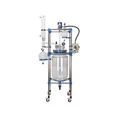

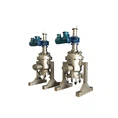
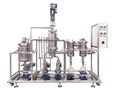
The fermentation tank, a seemingly ordinary piece of industrial equipment, plays a pivotal role in modern biomanufacturing, often hailed as the "heart" of biological processes. From the yogurt and beer we consume daily to life-saving antibiotics and vaccines, and from biofuels to various bio-based materials, the contribution of fermentation tanks is ubiquitous. It's more than just a simple container; it's a "cradle of life" where microorganisms and cells perform their miraculous work, transforming raw materials into valuable products.

The Evolution of Fermentation Tanks: From Simple to Smart
The history of fermentation dates back thousands of years, with the earliest fermentation tanks likely being simple pottery or wooden vessels. However, with the advancement of science and technology, modern fermentation tanks have become highly complex and intelligent.
• Material Innovation:
Early fermentation tanks were often made of wood or clay, which were prone to contamination and difficult to clean. Today, stainless steel has become the mainstream material due to its corrosion resistance, ease of cleaning, and non-toxic properties, ensuring the cleanliness of the fermentation process and product quality. In special applications, glass and plastic may also be used.
• Structural Optimization:
Modern fermentation tanks are typically equipped with agitators, aeration devices, temperature control systems, pH sensors, dissolved oxygen probes, and more.
• The agitation system
which ensures uniform mixing of the culture medium and sufficient dissolution of oxygen.
• Aeration devices provide the necessary oxygen for aerobic microorganisms.
• Precise control systems
which can monitor and adjust various parameters during the fermentation process in real-time, creating optimal growth and product synthesis conditions for microorganisms.
• Intelligent Development:
With the advancement of automation and artificial intelligence, modern fermentation tanks are becoming increasingly intelligent. Many large-scale fermenters are equipped with PLCs (Programmable Logic Controllers) or DCS (Distributed Control Systems), enabling automatic parameter monitoring, historical data recording, fault alarms, and remote control, significantly improving production efficiency and stability. In the future, with the integration of big data and machine learning, the optimization and prediction of fermentation processes will become even more precise.

Core Functions of Fermentation Tanks
The core function of a fermentation tank is to provide a controlled growth environment for microorganisms or cells, enabling them to perform biotransformation efficiently. To achieve this, the control of several key parameters is crucial:
• Temperature:
Each microorganism has its optimal growth temperature. Fermentation tanks precisely control temperature through jackets, coils, or internal circulation systems, ensuring optimal enzyme activity and normal cell metabolism.
• pH Value:
The acidity or alkalinity of the culture medium significantly impacts microbial growth and product synthesis. Fermentation tanks typically automatically adjust the pH by adding acid or alkali, maintaining it within the optimal range.
• Dissolved Oxygen:
For aerobic fermentation, sufficient dissolved oxygen is critical. Agitation speed, aeration rate, and fermentation broth viscosity all affect dissolved oxygen levels. Modern fermentation tanks use dissolved oxygen probes for real-time monitoring, linking with aeration and agitation systems for adjustment.
• Agitation Speed:
Agitation not only mixes the culture medium but also promotes oxygen transfer and heat dissipation. The appropriate agitation speed must ensure mixing while avoiding shear stress that could damage cells.
• Aeration Rate:
Sterile air or oxygen-enriched air is sparged into the fermentation broth through spargers, providing an oxygen source for aerobic microorganisms.
• Feeding:
In high-density fermentation, nutrients are gradually consumed. Through a feeding system, nutrients like glucose and amino acids can be added periodically or continuously, extending the fermentation cycle and increasing product yield.
Applications of Fermentation Tanks
• Food Industry: Beer, wine, yogurt, soy sauce, vinegar, baker's yeast, etc.
• Pharmaceutical Industry: Antibiotics, vaccines, recombinant proteins, therapeutic antibodies, enzymes, etc.
• Bioenergy: Bioethanol, biodiesel, etc.
• Environmental Protection: Anaerobic fermentation in wastewater treatment, bioremediation, etc.
• Agriculture: Agricultural antibiotics, biopesticides, microbial fertilizers, etc.
• Chemical Industry: Production of various bio-based chemicals, organic acids, amino acids, etc.

The fermentation tank, this "magic box" of the industrial age, is constantly evolving. With its powerful functions and infinite potential, it drives the vigorous development of the biomanufacturing industry, making indispensable contributions to human health, food, energy, and environmental protection. Next time you enjoy a cup of yogurt or use a medication, remember that a fermentation tank may have quietly contributed to it.