

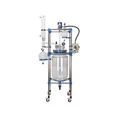

Rotary evaporators are indispensable tools in various scientific disciplines, offering precise and efficient methods for solvent removal. In this comprehensive guide, we delve into the intricacies of rotary evaporators, exploring their working principles, diverse applications across industries, proper setup procedures, and the significance of vacuum distillation.

Understanding Rotary Evaporators
A rotary evaporator is a laboratory instrument used to gently and efficiently remove solvents from samples by evaporation under reduced pressure. This process involves rotating a flask to create a thin film of the sample on the inner surface while applying heat to facilitate evaporation.
Working Principle
The key components of a rotary evaporator include a motor unit that rotates the evaporation flask, a heating bath or water bath for temperature control, a condenser to collect condensed vapors back into liquid form, and a vacuum pump to lower the pressure inside the system. By combining controlled rotation with heat and reduced pressure environments, rotary evaporators enable rapid solvent removal without compromising sample integrity.

Applications Across Industries
Chemical Research: Rotary evaporators play a crucial role in chemical synthesis processes such as the concentration of extracts or purification of reaction mixtures.
Pharmaceutical Industry: They are used for solvent recovery in drug development processes and isolation of active compounds from natural sources.
Food Technology: Rotary evaporation is employed in food research labs for aroma extraction or concentration of flavors.
Environmental Analysis: Environmental scientists utilize these instruments for analyzing pollutants in air or water samples.

Stay tuned for more information on cutting-edge laboratory equipment such as rotary evaporators and tips to optimize their performance effectively! You can also contact us at info@toptionlab.com.