

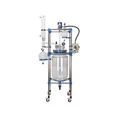

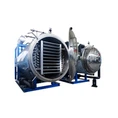
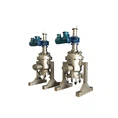
TOPTION Stainless Steel Distillation System for Continuous, Batch, and Multi-Component Separation
Chemical, pharmaceutical, food, fragrance, and new material manufacturers use stainless steel distillation systems to separate valuable liquid ingredients from complex mixtures. Many users need higher purity, lower product loss, safer operation, and better process control. Simple distillation can handle easy separations, but complex mixtures often need controlled reflux, vacuum operation, and rectification.
Therefore, TOPTION designs stainless steel distillation systems for continuous distillation, batch distillation, and multi-component collection. A modular system can support lab research, pilot trials, and production. This article explains how the system works and outlines when to choose each mode. It also explains how TOPTION helps users build a true purification solution.

Key Takeaways
- Continuous distillation suits stable feed, large output, and long production runs.
- Batch distillation suits small batches, changing formulas, and process development.
- Multi-component collection helps users separate several valuable fractions from one mixture.
- PLC reflux control improves process stability and reduces manual error.
- Vacuum design helps protect heat-sensitive materials from high-temperature damage.
The Core Industry Challenge
Producers do not need to simply "distill a solvent." They need to separate a real mixture with changing boiling ranges, varying levels of different impurities, and defined purity objectives. The system also lacks control, and the product will be low in value, with light impurities, heavy residue, or a mixture of fractions. This leads to greater rework.
Working with valuable fractions can increase complexity. For example, a simple still may separate only one light overhead and one heavy bottom product, thereby wasting useful fractions. This also adds an inability to indicate separate cut points and complicates the scaling of the process.
Heat-sensitive materials create another problem. Some fragrance, food, pharmaceutical, and fine chemical materials degrade under high temperatures. They may darken, oxidize, polymerize, or lose active content. In these cases, the system must reduce boiling temperature through vacuum operation and shorten heating time through better heat transfer.
Understanding the Fundamentals
The principle of distillation lies in the separation of components of a mixture due to differences in their boiling point. The more volatile component(s) of the mixture vaporizes first. The vapor moves up through the distillation column, while the liquid moves in the opposite direction. The vapor gradually becomes more enriched in the volatile component(s) of the mixture. The condenser at the top of the column, then condenses the vapor to a liquid.
Reflux distillation further enhances this process. In reflux distillation, a part of the condensed liquid, also called distillate, is returned to the column. The liquid returns to the column and is in continuous contact with the rising vapor, thus facilitating enhanced separation.
Key Terminology Explained
- Reflux Ratio: This describes the amount of liquid returned to the column in comparison to the amount of product collected. To improve the purity of the product, the reflux ratio may be increased, at the expense of overall product collected.
- Theoretical stage: This describes one perfect vapor-liquid contact step in a distillation column. Usually more effective stages improve separations.
- Cut point: Adjustments to the collected fractions are changed by the operator at the cut point, which can be described in terms of time, temperature, or the measure of the content.
- Vacuum distillation: The reduced pressure utilized in this process sustains a lower boiling point while protecting sensitive materials from heat.
Mechanism of Action
The process starts when the feed enters the kettle or column. The reboiler supplies heat. Light components vaporize first and move upwards. Heavy components remain in the liquid phase and move downwards. The condenser cools the vapor. The reflux system feeds liquid back to the column. The selected product fraction is collected in the receiver.
For the separation of multi-component systems, the PLC can be programmed to control collection of different fractions at different points or times. 'Reflux ratio control,' 'valve switching,' and 'collection tank selection' (refers to collection points in the system) are fully automated controls.

Technical Deep Dive: TOPTION Stainless Steel Distillation System
TOPTION stainless steel distillation systems can integrate a distillation column, reboiler, condenser, reflux unit, feed tank, product receivers, a vacuum system, and a temperature control unit along with a PLC control cabinet. The design is based on the material, capacity, boiling range, purity target, and safety requirements.
Materials and Corrosion Resistance
TOPTION provides a variety of system materials including SUS304, SUS316L, titanium, and Hastelloy. SUS304 is appropriate for general applications, while SUS316L is preferred for most food and pharmaceutical process applications due to its greater corrosion resistance. In applications with more corrosive components, titanium and Hastelloy materials are recommended.
Material selection is an important consideration to ensure a balance between equipment lifetime and product purity in the case of materials with corrosion by-products. Users submit the target solvent, acid or alkali, chloride and moisture content, temperature, and type to finalize the design.
Customizable Technical Parameters
| Item | Customizable Range |
|---|---|
| Kettle volume | 1 L–5000 L |
| Column diameter | φ25 mm–3000 mm |
| Pressure | Atmospheric, vacuum ≤0.1 mbar, or pressurized |
| Temperature | Room temperature–300℃ |
| Materials | SUS304, 316L, titanium, Hastelloy |
These ranges allow TOPTION to build systems for lab testing, pilot scale, and production. A small system may help users confirm process data. A larger system can support continuous operation or industrial production after the process becomes stable.
Column Type
The system can utilize either a tray or packed column. Packed columns support greater contact and can lessen pressure drop. These columns are suitable for vacuum and fine chemical applications. Tray columns provide clearly defined stages and may be useful for large production processes.
Engineers make a determination for the column type considering the composition of the feed stream, pressure, viscosity, fouling and the difficulty and type of separation.
Reboiler and Heat Transfer
The reboiler drives the whole process. It provides heat to vaporize light components. For standard materials, a kettle-type reboiler may meet the process need. For heat-sensitive materials, TOPTION can configure a wiped film reboiler. This design spreads the liquid into a thin film, improves heat transfer, and reduces residence time.
Shorter heating time helps reduce degradation. This matters when the product has high value or poor thermal stability.
Condenser and Receiver System
A condenser should align with the specific vapor load. Inadequate condenser area means insufficient vapor recovery, as vapor will pass through the system. Insufficient cooling temperatures may result in poor condensation of lighter components.
If there are several components to be collected, TOPTION can set up multiple receiving tanks. The system can alternate tanks to use during various stages of distillation. This facilitates the collection of light fractions, primary, side, and heavy fractions.


Continuous Distillation System
A continuous distillation system works best when the feed composition stays stable. The feed enters the system at a steady rate. The overhead and bottom products leave the system at the same time. This mode can support long production runs and higher output.
Continuous distillation suits solvent recovery, stable chemical production, and large-volume purification. It can reduce downtime because operators do not need to stop the system after each batch. It also helps when the plant needs 24-hour operation.
However, continuous operation needs reliable feed control. If the feed composition changes too much, the column balance may shift. This can affect purity. Before choosing continuous distillation, users should confirm feed stability, daily capacity, target purity, and available utilities.
Batch Distillation System
A batch distillation system works better for flexible production. The operator loads the material first, then heats the kettle and collects fractions step by step. This mode suits R&D, pilot testing, small production, and multi-product plants.
Batch distillation gives users more freedom. They can test different reflux ratios, cut points, vacuum levels, and collection times. This helps when the process is still under development.
For example, a pilot plant may need to purify several products in one week. Each product has a different boiling range. A batch system lets the operator change the recipe without rebuilding the whole process line.
Multi-Component Collection System
TOPTION can tailor a multi-component collection system with a multi-point discharge, PLC reflux control, and an automatic tank switch to extract multiple, useful fractions from complex, multi-component mixtures.
This multi-point discharge capability allows sampling from different locations or stages. The PLC reflux control provides separation throughout the duration of the reflux and optimally manages the automatic switching of the receiving tanks to minimize the operator error during the collection for cuts.
This design helps users recover more value from one feed material. It also supports cleaner separation when the product contains close-boiling components. TOPTION application references include examples such as 1-hexene purity ≥99.5%, decene purity >98.5%, and distillation loss rate <0.4%. Actual results depend on feed composition and operating conditions.
Comparative Analysis: TOPTION Stainless Steel Distillation System vs. Single-Mode Legacy Equipment
A legacy system often supports only one operating mode. It may work for a fixed process, but it may limit product development. A modular system gives more room for process changes.
| Evaluation Point | Single-Mode Legacy Equipment | TOPTION Modular Distillation System |
|---|---|---|
| Operating mode | Usually continuous or batch only | Can be customized for continuous and batch modes |
| Multi-component collection | Often limited | Multi-point discharge and multi-tank collection available |
| Reflux control | Often manual or semi-manual | PLC reflux ratio control available |
| Vacuum performance | Depends on seal and vacuum package | High-vacuum option down to ≤0.1 mbar |
| Heat-sensitive materials | May create long heating time | Optional wiped film reboiler can reduce residence time |
| Data traceability | Often limited | Temperature, pressure and flow records can be exported |
| System flexibility | Lower | Higher, especially for R&D to scale-up |
Typical Applications Of TOPTION Distillation Systems
Fine Chemicals
Fine chemical producers often need solvent recovery and reaction product purification. A chemical solvent recovery distillation system can help recover usable solvents and reduce waste treatment volume.
- Problem: A reaction stream contains solvent, light impurities, main product and heavy residue.
- Solution: A stainless steel distillation system separates the light solvent first, then collects the target fraction under controlled reflux.
- Outcome: The producer can recover solvent, improve product purity and reduce material loss.
Pharmaceutical Processing
Pharmaceutical users often need to purify intermediates or dehydrate solvents. These materials may have strict impurity limits and strong documentation needs.
- Problem: A pharmaceutical intermediate contains close-boiling impurities and cannot tolerate long heating.
- Solution: A vacuum distillation system with PLC control and optional high-vacuum configuration reduces boiling temperature and improves process repeatability.
- Outcome: The process can target higher purity while reducing thermal stress.
Food, Fragrance, and Nutraceutical Materials
Food, fragrance and nutraceutical materials often contain aroma compounds or active components. These components may change under heat or oxygen.
- Problem: A fragrance fraction contains volatile components with close boiling ranges.
- Solution: A multi-component distillation collection system uses controlled reflux and staged receiving tanks.
- Outcome: The user can collect different aroma fractions and reduce cross-contamination between cuts.
New Materials and Environmental Recovery
New material and environmental applications often focus on solvent refining, waste solvent regeneration and electrolyte solvent purification.
- Problem: A plant needs to regenerate used solvent and control impurities.
- Solution: A continuous distillation system processes stable feed and recovers usable solvent.
- Outcome: The plant can reduce waste and improve solvent reuse.
Why Choose TOPTION for Custom Distillation Equipment?
TOPTION specializes in extraction, distillation, filtration, drying, and pretreatment equipment. The company's objective is to enhance the accuracy and efficiency of research. Distillation equipment's true purpose is to achieve separation while maintaining enhanced control and minimizing uncertainty.
Full-Scenario Coverage
TOPTION integrates continuous, batch, and multi-component distillation. The system is designed to cater to small-scale experimental, pilot production, and industrial-scale customizations.
This is important for users who disfavor a permanent machine designed to address only one problem. A majority of users begin the process with lab data, and pilot production followed with process adjustments. A system of this nature can facilitate that provision.
Material and Compliance-Oriented Design
Depending on the parameters of corrosion, cleanliness, product value, and temperature of the process, TOPTION can provide alternatives such as SUS304, 316L, titanium, and Hastelloy.
In the pharmaceutical and food industries, the 316L can sustain a GMP-Centric design. For more corrosive contents, one of titanium or Hastelloy would contain the best resistance. In the case of general solvent recuperation, either SUS304 or 316L would fit the process requirements.
Optimized material selection increases equipment lifespan while ensuring the product's quality is maintained.
From Selection to After-Sales Support
Selecting, manufacturing, commissioning, and after-sales service, TOPTION aids the users at each step. This is important as the success of a distillation process is based on the accuracy of the engineering involved.
In the design of the system, the engineers must first understand the feed and finalize the parameters of collection with regard to the purity, throughput, and temperature that is acceptable for the target system. A supplier who only sells standard equipment may miss these process details.
TOPTION's engineering approach starts from the process requirement. Then the system design follows.
Manufacturer Trust Signals
TOPTION has over 18 years of experience in the chemical equipment industry. We make equipment in extraction, distillation, filtration, drying, and pretreatment. CE, SGS, TUV, and UL-related international standards are part of TOPTION's equipment profile.
For global users, these trust signals are important. These signals indicate that the manufacturer has knowledge of equipment and international project communication.

How to Select the Right Distillation System
To ensure an accurate matching solution, we recommend providing the following information:
- Original material composition
- Target product and required purity
- Expected processing capacity per batch or per day
- Continuous or batch production preference
- Required operating temperature
- Required operating pressure or vacuum level
- Heat sensitivity or oxidation sensitivity
- Explosion-proof requirement
- Cleanliness or GMP-related requirement
- Material corrosion characteristics
- Required number of collected fractions
- Expected automation level
- Available utilities, such as cooling water, chilled water, steam, thermal oil, vacuum and power supply
This information helps engineers choose the correct kettle volume, column diameter, column type, material, vacuum package, condenser area and control plan.
For example, a customer who wants to recover a simple solvent may need a standard distillation configuration. A customer who wants to collect three high-value fractions from a complex mixture may need multi-point discharge, precise reflux control and automatic tank switching.
FAQ: Continuous and Batch Distillation Systems
Q1: What differentiates continuous distillation from batch distillation?
Continuous distillation has continuous feed and continuous discharge. This is more appropriate when demand is steadier. Daily, weekly and seasonal cycles of production call for continuous distillation. This method is ideal for cases of larger scale distillation and longer operating cycles.
In batch distillation, distillation is begun when the system has been loaded. The fractions are taken off successively. This method is suited for R&D, pilot plants, small-scale distillations. This method is especially more appropriate for distillations that may call for new distillation apparatus.
Q2: Do you think one TOPTION distillation system, can be both continuous distillation and batch distillation?
TOPTION can provide modular distillation systems from which clients can order versatile systems to cater for both batch and continuous distillation. This saves clients from the need to invest on two separate distillation systems. Clients can alter the versatiltity of the modular distillation system at various stages of production.
Q3: What materials would TOPTION's stainless steel distillation systems be made of?
TOPTION offer an abundance of material choice. The choice of material is dictated by the process to which the system would be subjected and the process to which the system would be subjected. Sus304,316L are top in choice of stainless steel. Titanium and Hastalloy may be chosen.
Q4: Is TOPTION's distillation system suitable for the distillation of heat-sensitive materials?
TOPTION can, for the case of heat sensitive material that are susceptible to the effects of oxidation, offer the client magnetic sealing, high vacumb and wiped film reboiler design. These features procedural distillation with minimal contact with heat.
Q5: Before requesting design of distillation systems, what data do they need?
The data needed for design request includes, product purity, system feed, production capability, operational temperature, vacuum or pressure, the number of distillation fractions, the corrosion data, the system needs the right levels of purity, the system needs to be explosion proof, and so on.
Conclusion
Stainless Steel Distillation Systems built by TOPTION can be customized to your materials, purity targets, production preferences and safety requirements. Continuous Distillation supports stable, high-volume production. Batch Distillation supports flexible research and small batch distillation. Multi-component collection aids customers in increasing the value extracted from a complex mixture.
TOPTION provides customized separation systems that combine modular design, PLC reflux control, and automatic collection. Improved purity, reduced losses, and easier-to-repeat production have all been achieved with TOPTION systems in the chemical, pharmaceutical, food, fragrance, and new materials industries.
Please share your feed composition, desired purity, and production capacity with TOPTION. We'll provide the solution necessary for your production requirements and offer you the distillation systems with the best price-performance.
2L stainless steel batch distillation unit