


Products Description

Foreword
Many products we encounter in our daily lives, from medicines and food to plastics and coatings, owe their existence to chemical reactions. In industrial production, carrying out these reactions safely and efficiently requires reliable equipment – the reactor. Among them, stainless steel reactors have become the preferred choice for numerous industries due to their unique advantages. Today, let's take an in-depth look at this indispensable "workhorse" of modern industry.

What is a Stainless Steel Reactor?
Simply put, a stainless steel reactor is a sealed vessel made of stainless steel used for carrying out physical or chemical reactions. By precisely controlling conditions such as temperature, pressure, and agitation speed within the vessel, it can facilitate various processes like mixing, heating, cooling, evaporation, polymerization, hydrogenation, and more. It acts like a powerful "industrial kitchen," providing the ideal environment for diverse chemical reactions.
Why Choose Stainless Steel? – The "Stainless" Advantage


The Anatomy of a Stainless Steel Reactor – Main Components
A standard stainless steel reactor typically consists of the following key parts:
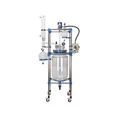
Vessel Body: This is the main part of the reactor where materials react. It's usually cylindrical with elliptical or dished heads.
Agitation System: Includes a motor, reducer, and agitator (e.g., paddle, anchor, turbine, frame types). Its function is to mix materials uniformly, accelerating heat and mass transfer. The agitator type and speed are selected based on factors like material viscosity and reaction type.
Heating/Cooling System: Usually takes the form of a jacket or internal coils. By circulating media like steam, thermal oil, or cooling water through the jacket or coils, the temperature of the material inside the vessel can be precisely controlled.
Sealing Device: Used to seal the gap between the vessel cover and body, and between the agitator shaft and cover, preventing material leakage or external contamination. Common types include packing seals and mechanical seals; the latter offers better sealing and is often used for high pressure or handling toxic, flammable, or explosive materials.
Instrumentation & Control: Includes thermometers/sensors, pressure gauges/sensors, level gauges, sight glasses, etc., used to monitor various parameters during the reaction process. Modern reactors are often equipped with automated control systems (PLC/DCS) for precise control of temperature, pressure, agitation, feeding, etc.
Inlet/Outlet Ports & Manhole: Used for adding and removing materials, as well as for internal inspection and maintenance of the equipment.


Wide Range of Applications: The Stage for Stainless Steel Reactors
Thanks to their reliability and versatility, stainless steel reactors play crucial roles in numerous fields:
Petrochemicals: Catalytic cracking, polymerization, hydrotreating, alkylation, etc.
Fine Chemicals: Synthesis of dyes, pigments, pesticides, pharmaceutical intermediates, fragrances, etc.
Pharmaceutical Industry: API synthesis, fermentation, extraction, concentration, crystallization, etc.
Food & Beverage: Jam cooking, dairy fermentation, beverage blending, syrup conversion, etc.
Biotechnology/Bioengineering: Cell culture, enzyme reactions, fermentation processes, etc.
New Materials: Polymer synthesis, nanomaterial preparation, resin production, etc.
Environmental Protection: Wastewater treatment, waste gas absorption, etc.

Safety First, Maintenance Paramount
The safe operation and long-term use of stainless steel reactors depend on careful maintenance:
Regular Inspections: Periodically check seals, safety valves, pressure gauges, thermometers, etc., to ensure they are intact and functioning correctly.
Standard Operating Procedures: Strictly adhere to operating procedures to avoid over-temperature or over-pressure operation.
Cleaning and Maintenance: Clean thoroughly after each use to prevent residual material from corroding the equipment or affecting subsequent production. Be mindful of cleaning methods to avoid scratching the inner walls.
Lubrication Management: Regularly add lubricating oil to components like the reducer.
Record Keeping: Establish equipment files to record operation, maintenance, and repair history.

Conclusion
As a core piece of equipment in modern industrial production, the stainless steel reactor provides a solid foundation for various chemical processes with its excellent corrosion resistance, stability, and reliability. From basic chemicals to high-tech biopharmaceuticals, its presence is ubiquitous. Understanding its structure, principles, applications, selection, and maintenance not only helps us better utilize this powerful tool but also allows for a deeper appreciation of the precision and efficiency of modern industrial production. We hope this blog post has demystified the stainless steel reactor for you, showcasing the significant role it plays in advancing technology and improving our quality of life.

Watch Now!